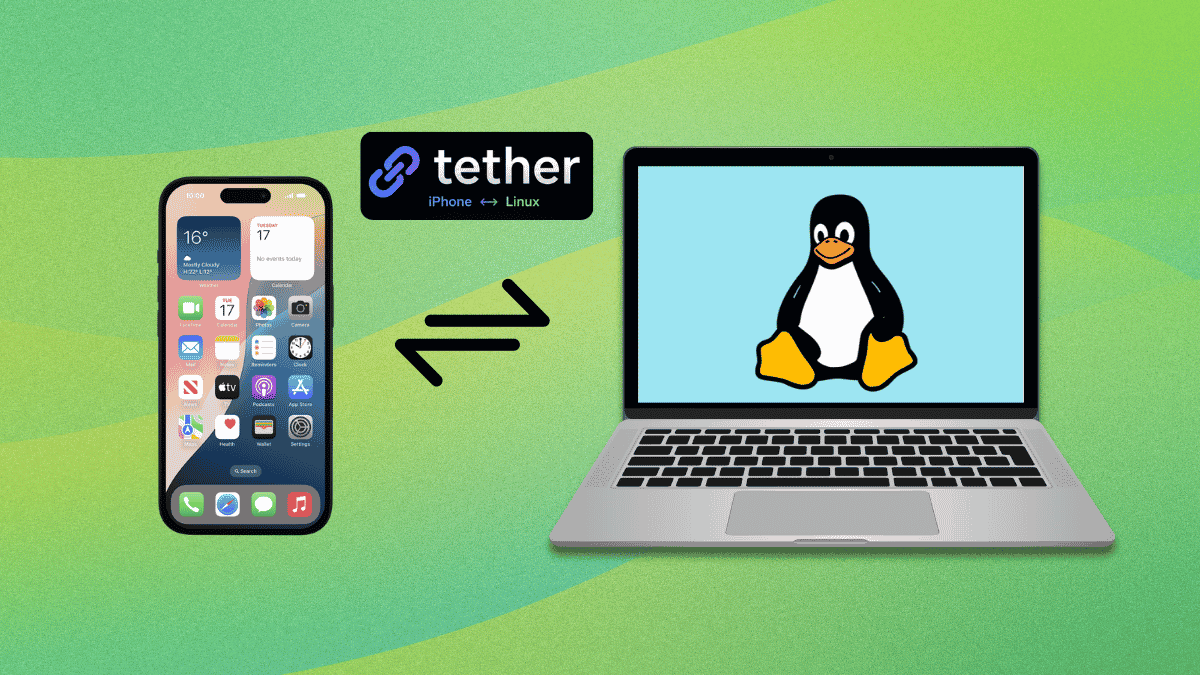
Zack Bartel is a developer who switched to Linux full time and hasn't really looked back at his earlier daily driver, macOS, as something he would return to. There is, however, an exception.
Continuity.
That is Apple's catch-all term for how iPhone, iPad, and Mac talk to each other. It covers a wide range of small conveniences. Copy something on the iPhone and paste it on the Mac. Start an email on one device and finish it on another. Take a call from the Mac even when the phone is across the room.
But, to no one's surprise, there's a gap in its support. It doesn't officially work on Linux. So Zack built Tether, an open source project that replicates pieces of that experience on Linux without requiring a Mac device.
What does it handle?
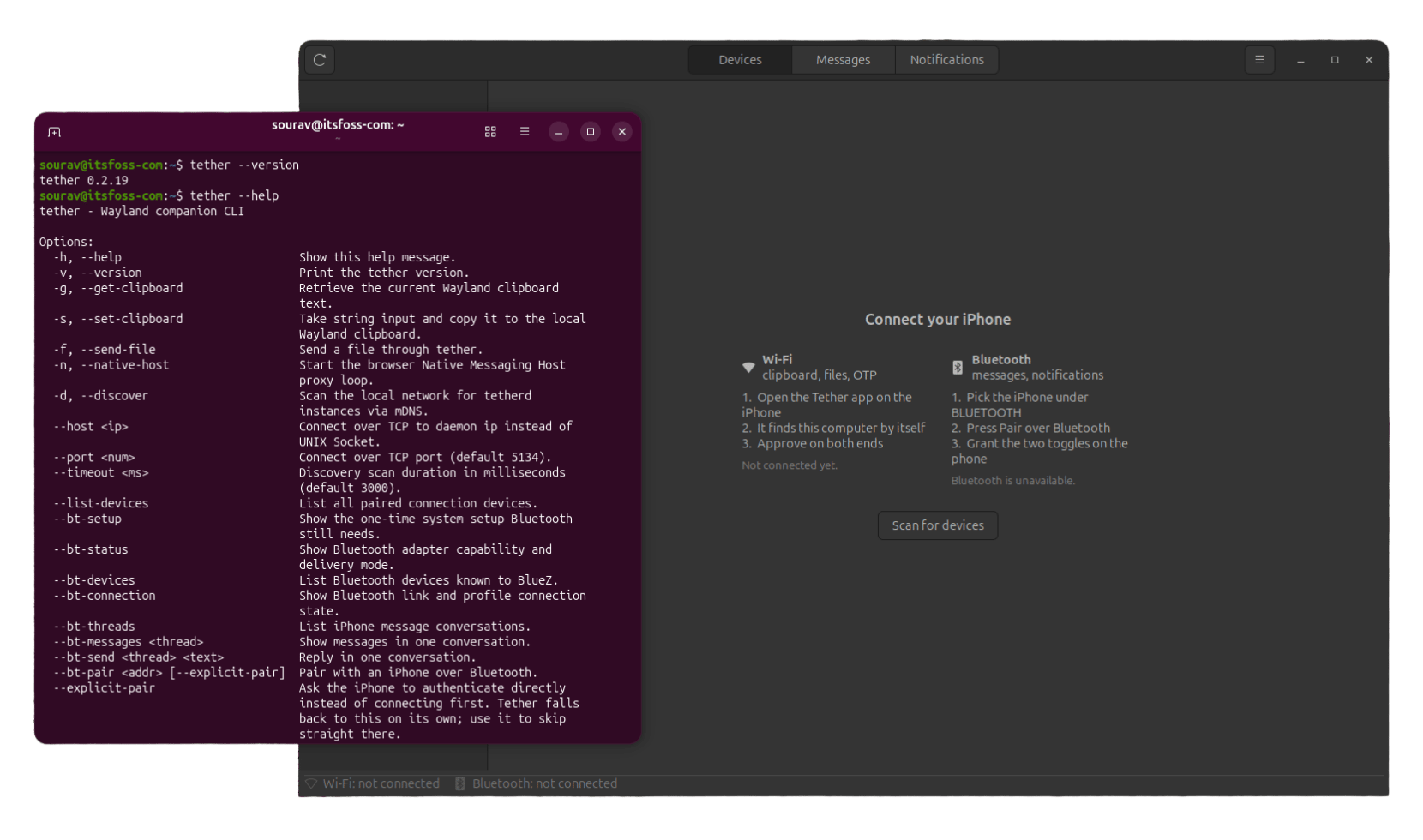
Considering an app whose first release was just a few months ago in May, Tether covers a lot of ground already. Clipboard sync, file transfer, OTP autofill, iMessage, SMS, notifications, and contact sync are all live right now, with some of them being in the beta stage of availability.
A background daemon called tetherd handles inter-device communication on Linux, talking to a CLI and a native GTK4 app for pairing. A SwiftUI iPhone app finds the daemon automatically over Bonjour.
Linux has no supported way into iMessage or SMS, and Zack ruled out the common workaround of proxying everything through an actual Mac.
ancs4linux and BlueFerry supplied enough Bluetooth groundwork for him to build his own path, though both are GPL-licensed, so a clean room C++ rewrite kept Tether licensed under MIT.
To secure it all, he built the pairing process on mTLS, so the iPhone and the Linux daemon each have to prove who they are before anything connects. Security sweeps run regularly on the codebase too via Anthropic's Opus and Fable AI models.
Before you say that KDE Connect already does a lot of what Tether does, know that Zack is aware of its existence and calls it great, but points out that the app doesn't cater to the use cases he had in mind.
Get it running
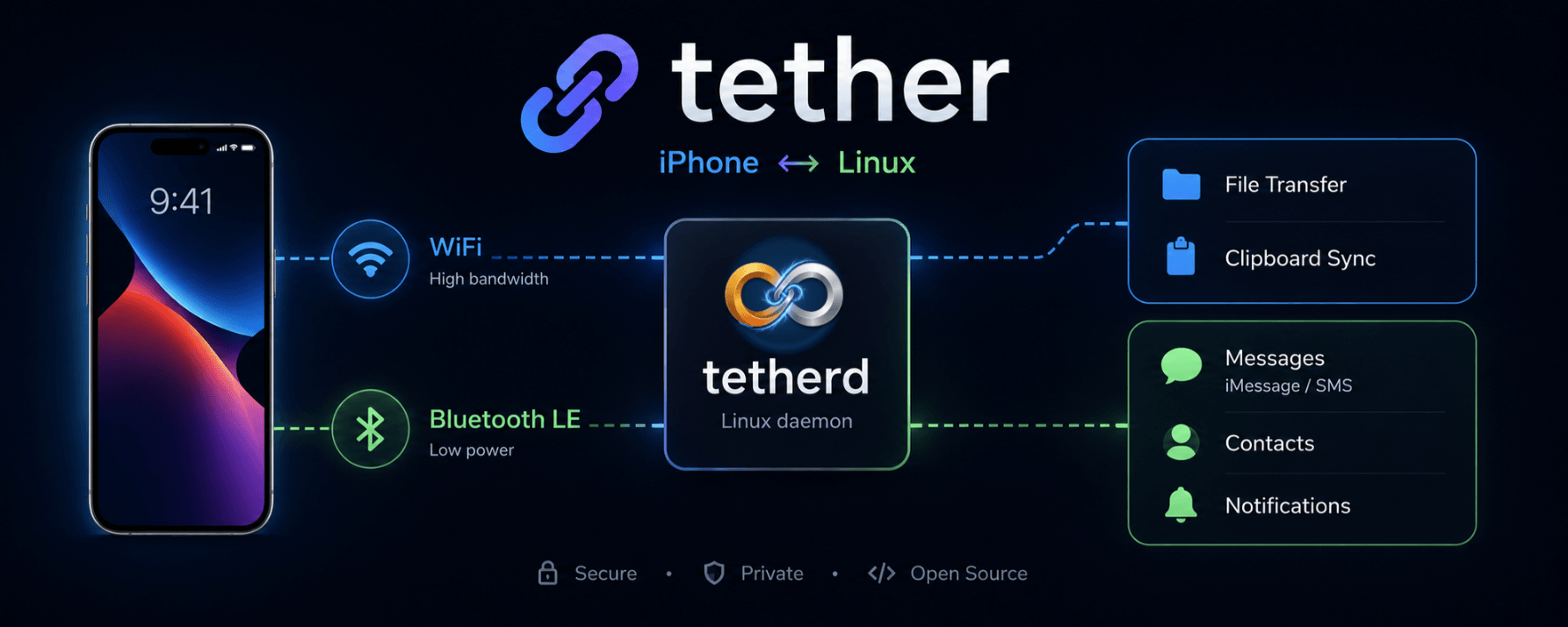
For Arch Linux users, Tether is available via the AUR; you can get it by running the following command:
yay -S tetherIf you don't know what Yay is, it is an AUR helper that makes the process of getting packages from the Arch User Repository easy. Though you do have to take note of the risks associated with using the community-run platform.
For other distros, the project's GitHub repo carries .deb and .rpm packages built for recent releases.
On your Apple iPhone, you will have to download the Tether - Linux Companion app from the App Store, which needs your device to be running at least iOS 26.1 or later.
There's also two extensions that you will need if you want OTP autofill to work properly.
The Firefox extension drops codes into login forms the moment they arrive, and the Thunderbird extension watches your inbox for anything that looks like a verification code and hands it off to the Tether app running on your Linux machine.

from It's FOSS https://ift.tt/IW4L3SM
via IFTTT