But I wanted something to work on my main computer. Out of all claw like agents, I find Hermes the most suited.
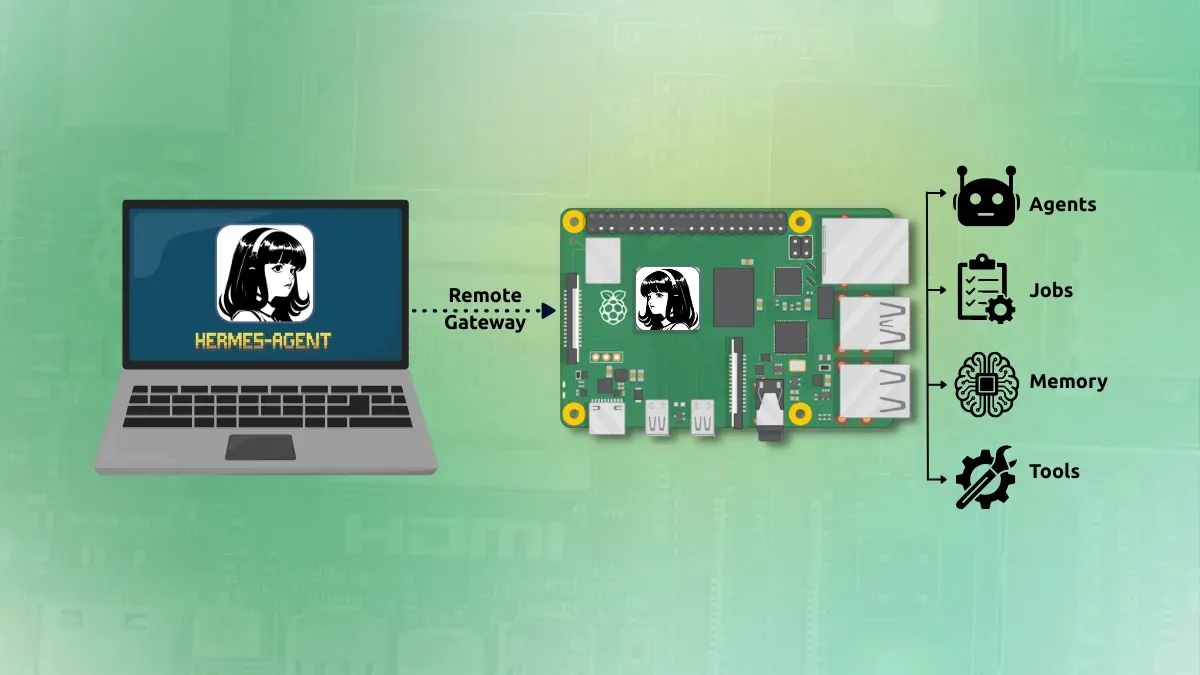
So I installed Hermes on a Raspberry Pi running on Pironman 5 Pro Max. And I installed Hermes desktop on my Asus Zenbook laptop, my primary system.
The advantage is that the Raspberry Pi remains the always-on Hermes machine. I can close Hermes Desktop or shut down the laptop without needing Hermes itself to run on the laptop (for scheduled tasks). Also, Hermes agents won't have unrestricted access to my system. A safer approach, in my opinion. At least, that's the idea I am going with.
During installation, Hermes may ask to choose a terminal backend:
Select terminal backend:

Local
Docker
Modal
SSH
Daytona
...
Keep current (local)
For this setup, you can leave this as:
Keep current (local)
The Terminal Backend setting is separate from the Remote Gateway setting. The gateway is what connects Hermes Desktop to Hermes running on your Raspberry Pi.
I also left out the model selection. Whatever the remote Hermes server uses will be used here, too.
Step 4: Use remote gateway on Hermes
Start Hermes Desktop from the terminal:
hermes desktop
That's the way it runs for the moment. Ironical to run a desktop GUI app from the terminal.
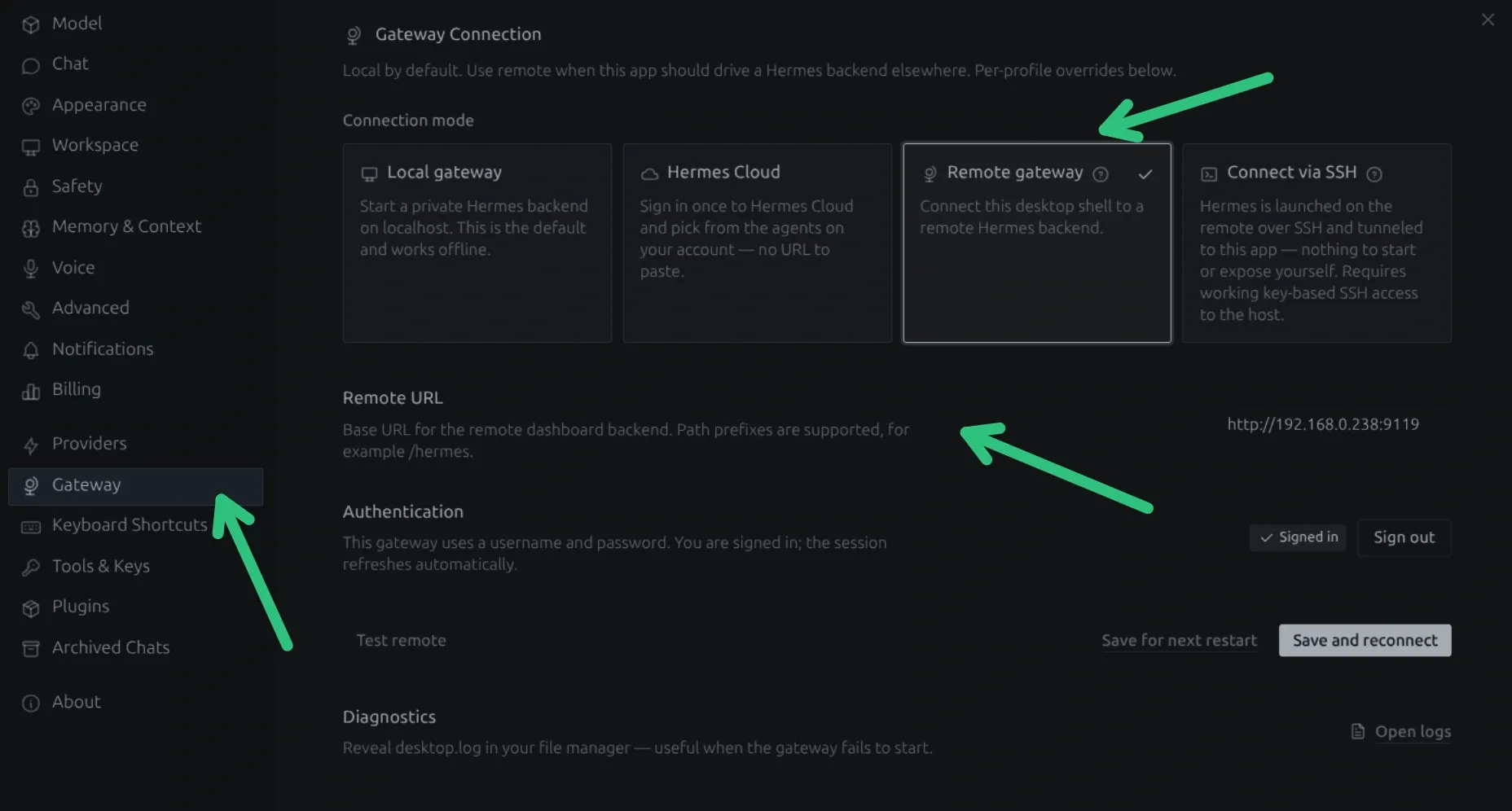
Anyways, inside Hermes Desktop, click on the settings and go to gateway and find the remote gateway option:
In the Remote URL field, enter the address of the device running the Hermes backend with the port 9119:
http://<IP of Pi>:9119
Then save/apply the setting and reconnect.
Hermes Desktop should now connect to the Hermes backend running on your Raspberry Pi.
Hermes Desktop becomes the interface for interacting with the Hermes instance on the Raspberry Pi.
Step 5: Make the gateway permanent
If things are working fine so far, it is time to make things permanent. Because keeping this running on the remote Hermes server is not a wise move.
hermes serve --host 0.0.0.0 --port 9119
Because if I close that terminal or reboot the Raspberry Pi, the gateway will stop.
For an always-on Raspberry Pi setup, running hermes serve as a systemd service works better.
No need to SSH into the Pi and manually launch Hermes every time. It will be automatically start thanks to the systemd service.
Check the status of the newly created systemd service:
systemctl status hermes-server
Conclusion
I am yet to fully utilize Hermes on desktop with the remote gateway method. Portability could be an issue if I move out of my home network, but even in that case, there are ways to SSH into Raspberry Pi from outside network.
The Linux Mint project regularly puts out monthly news that gives us a look at what the developers are working on and where the overall project is headed towards.
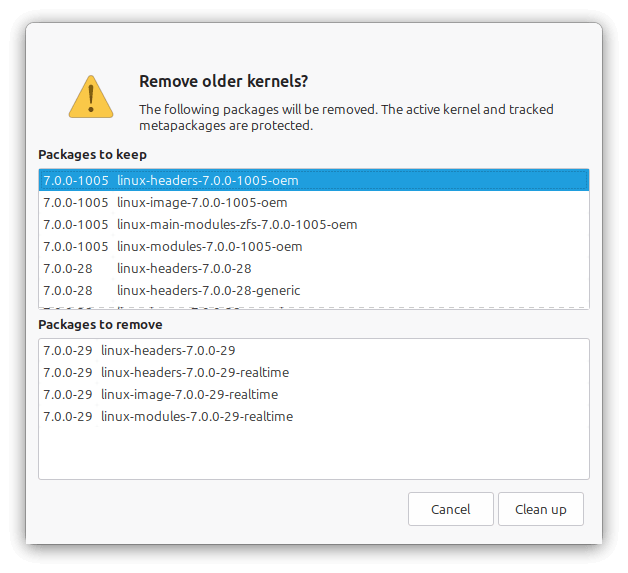
Their July update has shown us how the distribution intends to handle kernels going forward, moving the entire job out of the Update Manager and into a different tool altogether.
A new feature?
Source: The Linux Mint Blog
Yes, and no. Kernel management isn't new, as in the past, Update Manager has let users view and remove individual kernels, but that functionality was removed.
The new implementation sits inside the System Administration tool instead, and it's built to behave the same way whether you're on Linux Mint or LMDE.
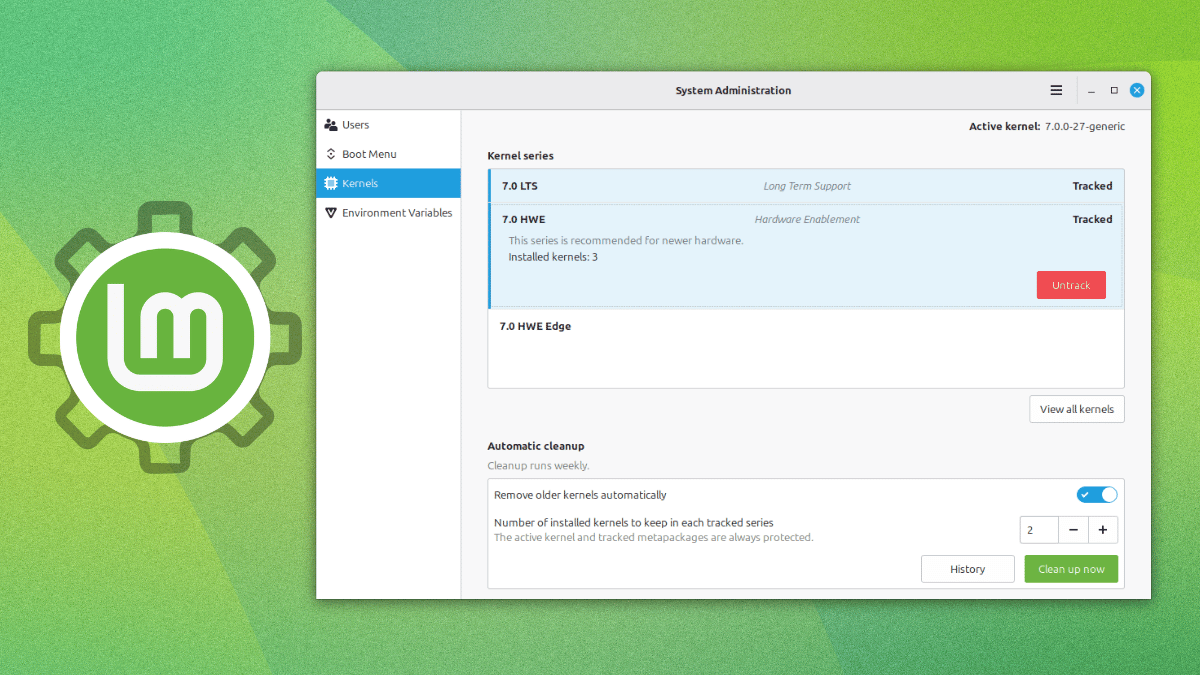
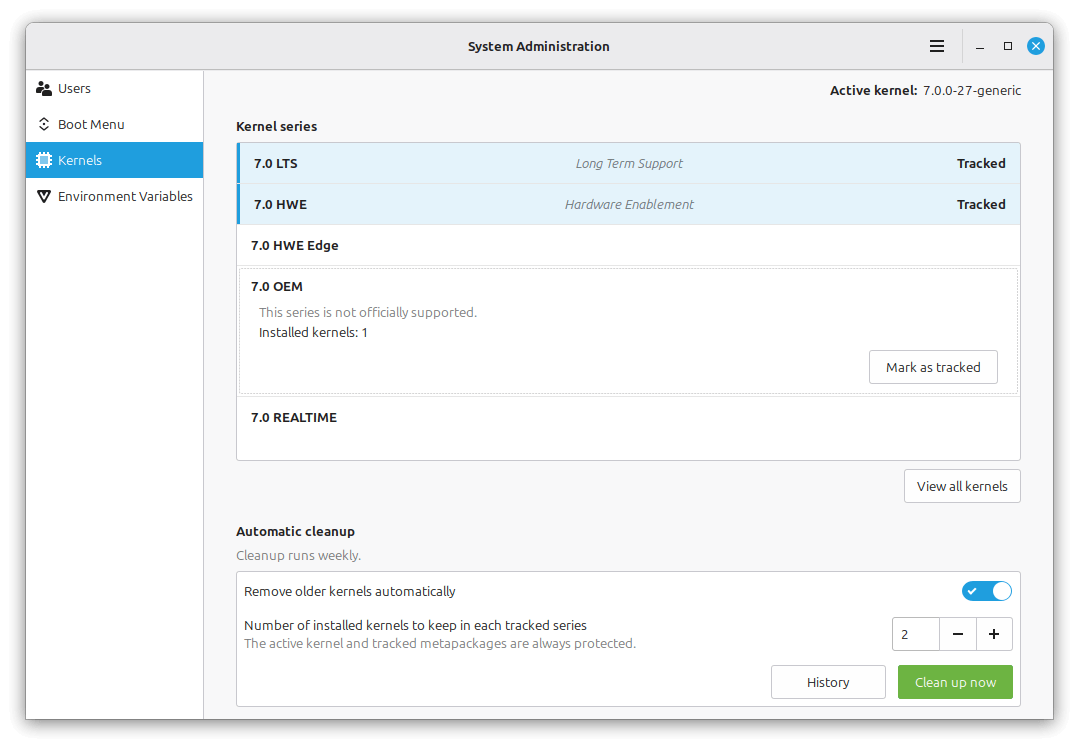
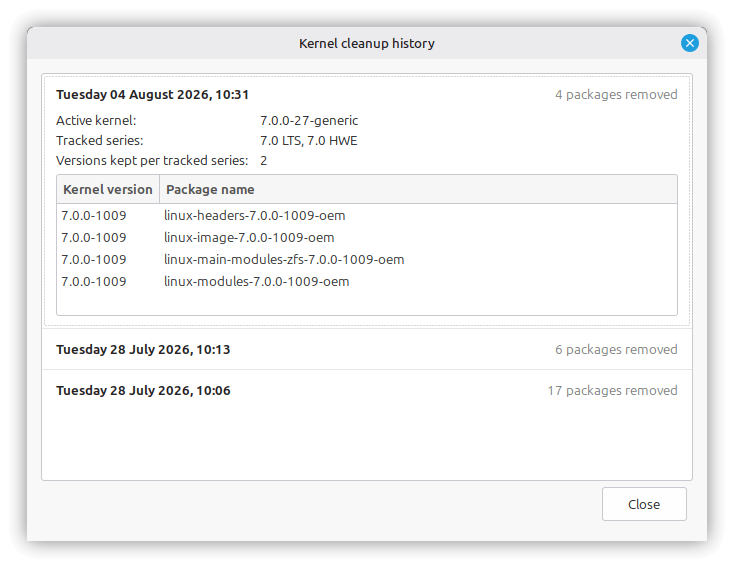
Instead of tracking individual versions one at a time, the new "Kernels" page inside System Administration groups multiple kernel versions according to series. Setting up the tool is a one-time choice of you telling it which kernel series matter to you and how deep a backlog to hold onto for each one.
Everything downstream runs on its own after that. The series you're following keeps updating through Update Manager the same way they always have, while anything past your set limit gets thrown out during a scheduled pass once a week.
Manual cleanups are possible too for times when you want to quickly free up some space to accommodate other content. Individual kernels can also be marked "Protected," which keeps them off the chopping block regardless of whether their series is tracked or how old they are.
Before you go looking for this on your own system, know that it isn't live yet.
Linux Mint project lead Clement Lefebvre has said that this is a preview of what's coming to the next Mint release.
Fedora has this already
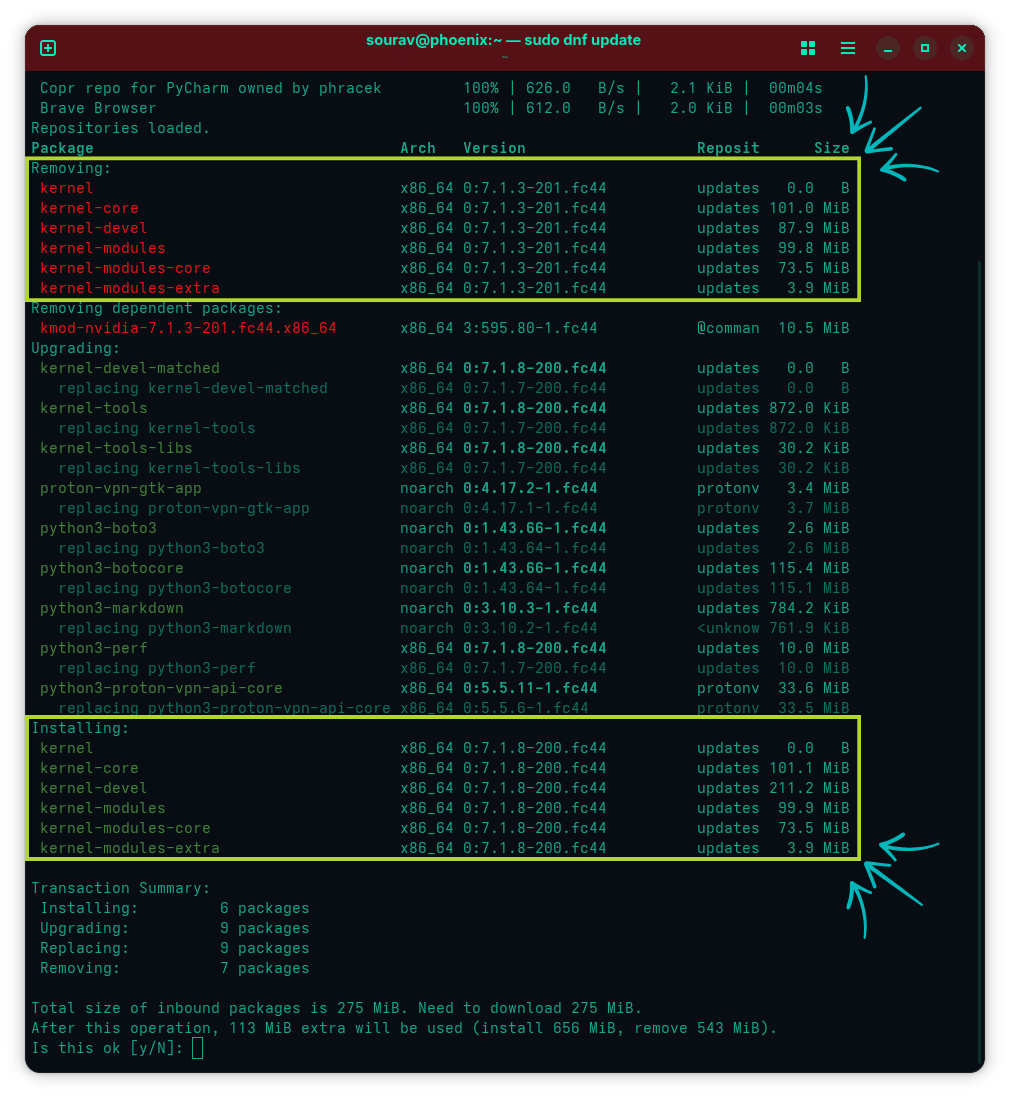
I understand that Linux Mint has had to reimplement their solution, but Fedora has had this problem solved for years. Its DNF package manager has done this by default the whole time.
The setting behind it is called installonly_limit, and it defaults to 3. Only the three most recent kernel builds stay installed at any given time. Whenever a new kernel comes in through a regular update, DNF removes whatever falls outside that limit as part of the same transaction.
There's no separate scheduled job behind it, unlike Mint's new weekly cleanup. It only runs when you actually update, so a kernel installed outside DNF's normal flow would just sit there untouched.
The two approaches end up solving a similar problem in different ways. Fedora's is a flat, always-on limit tied directly to the update transaction. Mint's new implementation, once it ships, would hand you more direct control instead.
Kernel management wasn't the only thing in Mint's July post. The team also shipped new HWE ISOs for Linux Mint 22.3, this time built on Linux 7.0, and Fcitx5 support lands in Cinnamon, running the same way across Wayland and X11.
For the full rundown, including the new environment variables page and the panel fixes, the original blog is a must-read.
Love them or hate them, rolling release distros have managed to take a slice out of the Linux desktop market share. They provide a bleeding-edge experience that stays quite stable if cared for and bites a user's a** if handled poorly.
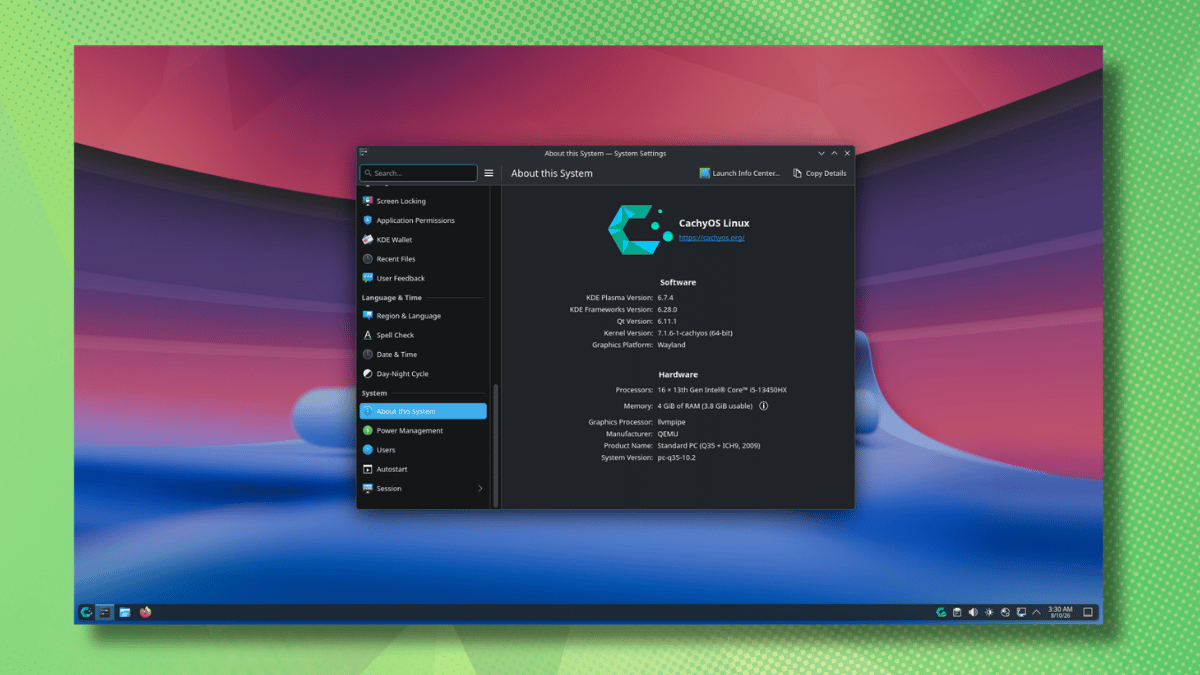
CachyOS is one of those options that has been only getting more popular as the days go by. Offering a rebuilt Arch package stack with CPU-specific optimizations and a custom kernel tuned for responsiveness, it is a distro that delivers some good performance.
You might remember late last year, the developers had teased plans for a dedicated Server Edition aimed at NAS setups and hosting providers. Their newest release shows us where some of the work is happening, along with the typical distro-focused improvements.
What's fresh?
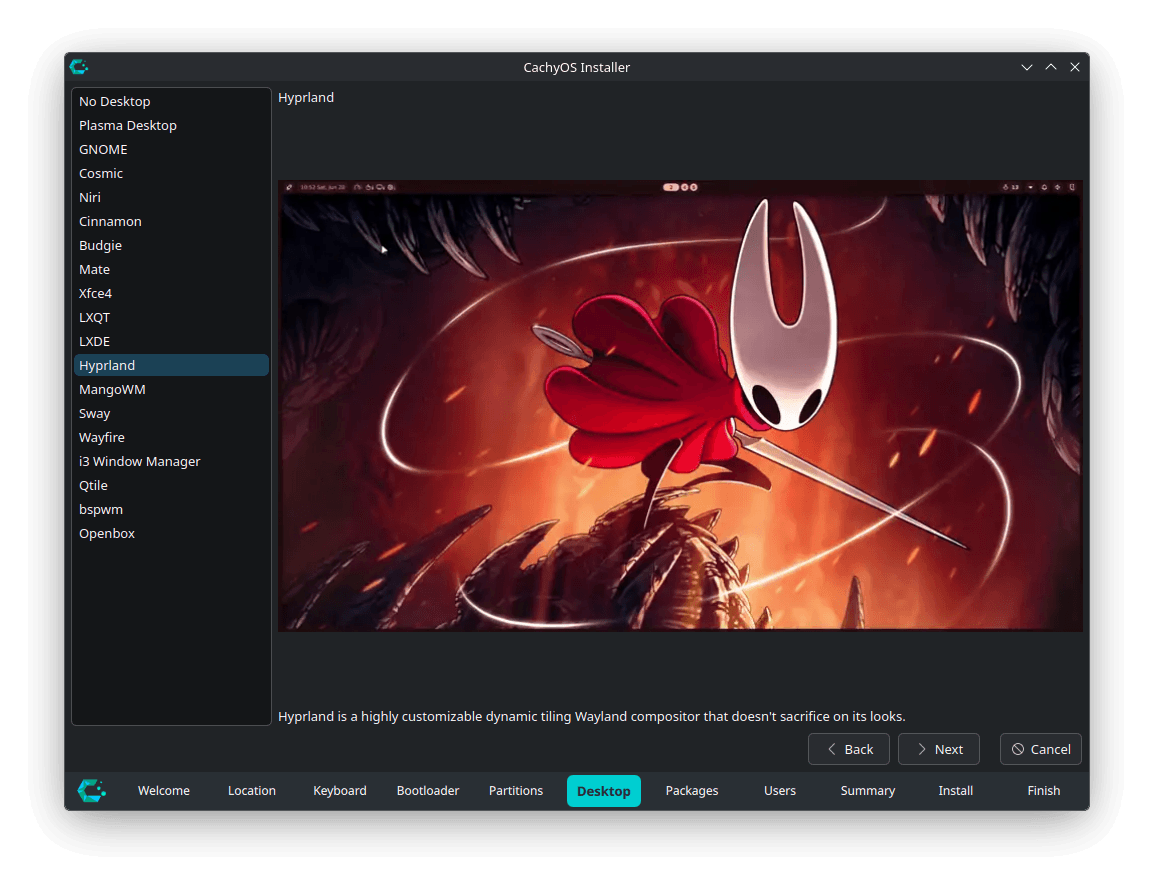
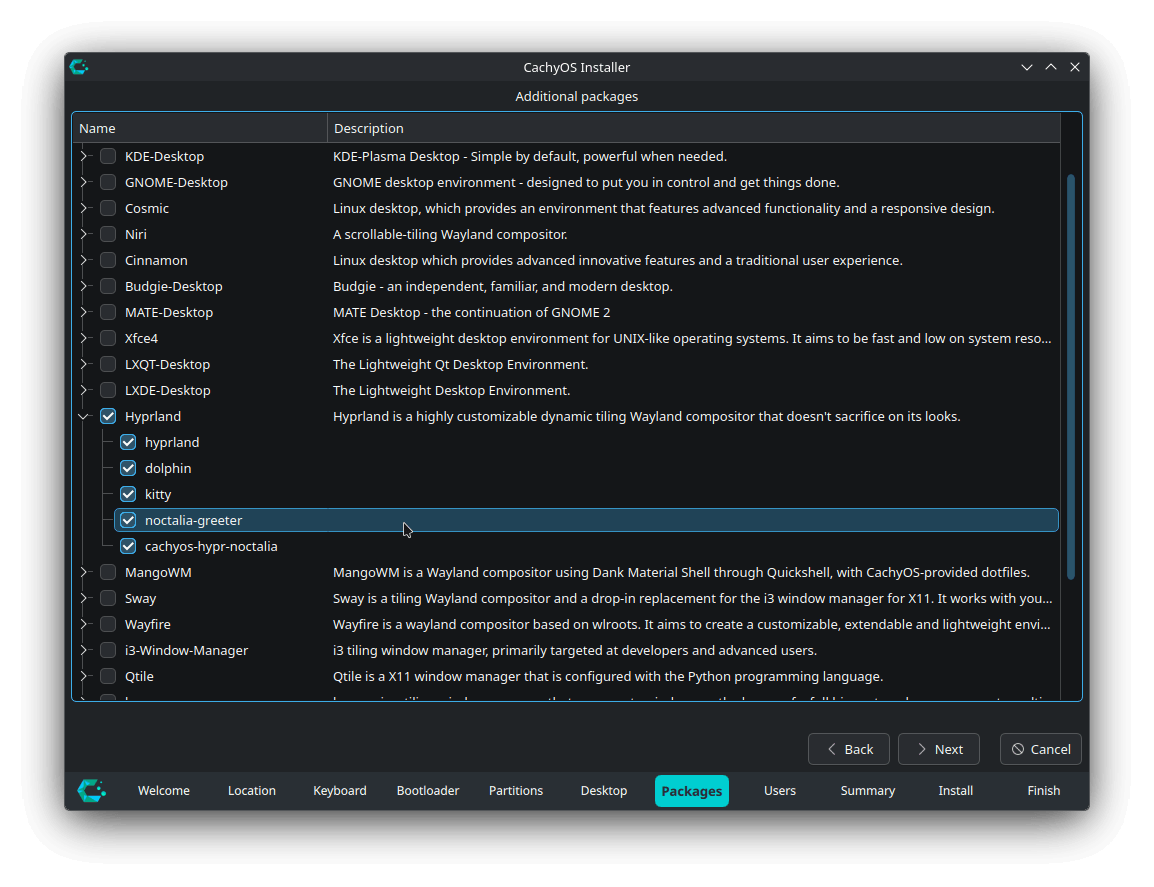
The graphical installer sees many new additions, such as Hyprland's Noctalia option swapping SDDM for noctalia-greeter, Cinnamon moving to lightdm-slick-greeter, GNOME gaining gvfs-dnssd, and COSMIC picking up cosmic-monitor.
For the CLI installer, other than the usual housekeeping work of addressing bugs and refactoring the code, there's experimental support for Server Edition installation profiles, marking a key milestone in the new variant's development.
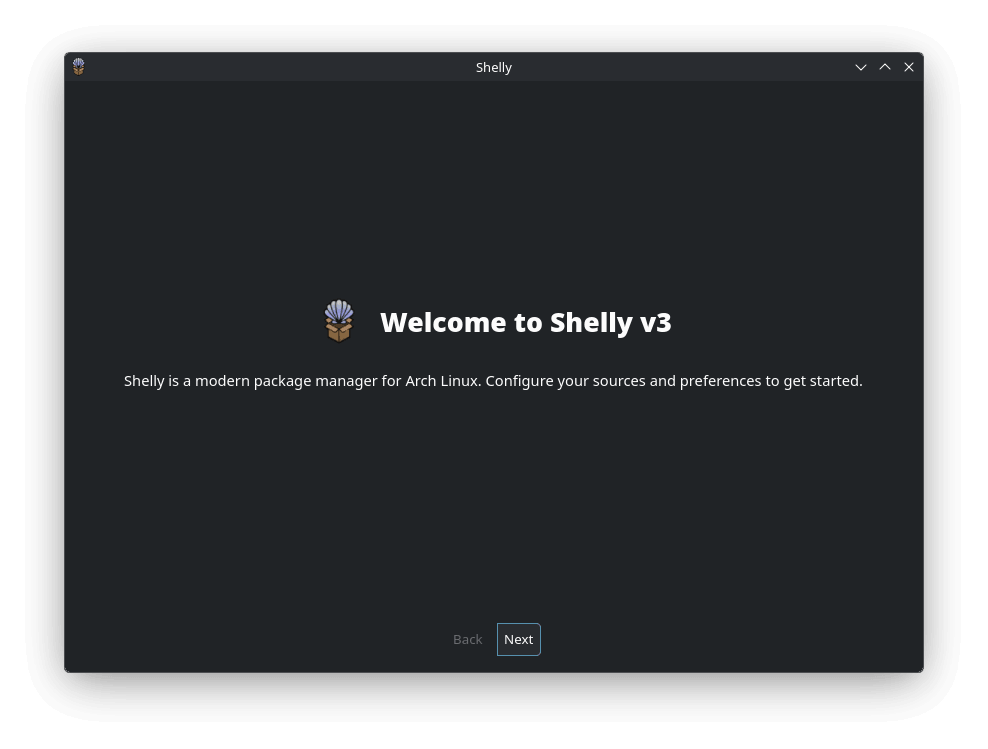
Shelly became CachyOS's default GUI package manager back in April, replacing Octopi, and we found it a promising switch once we spent time with it. With this CachyOS release, Shelly has got its most significant change yet with its v3 iteration.
It has gone from being written in C# to Zig, replacing the managed runtime with native binaries that start faster and use less memory.
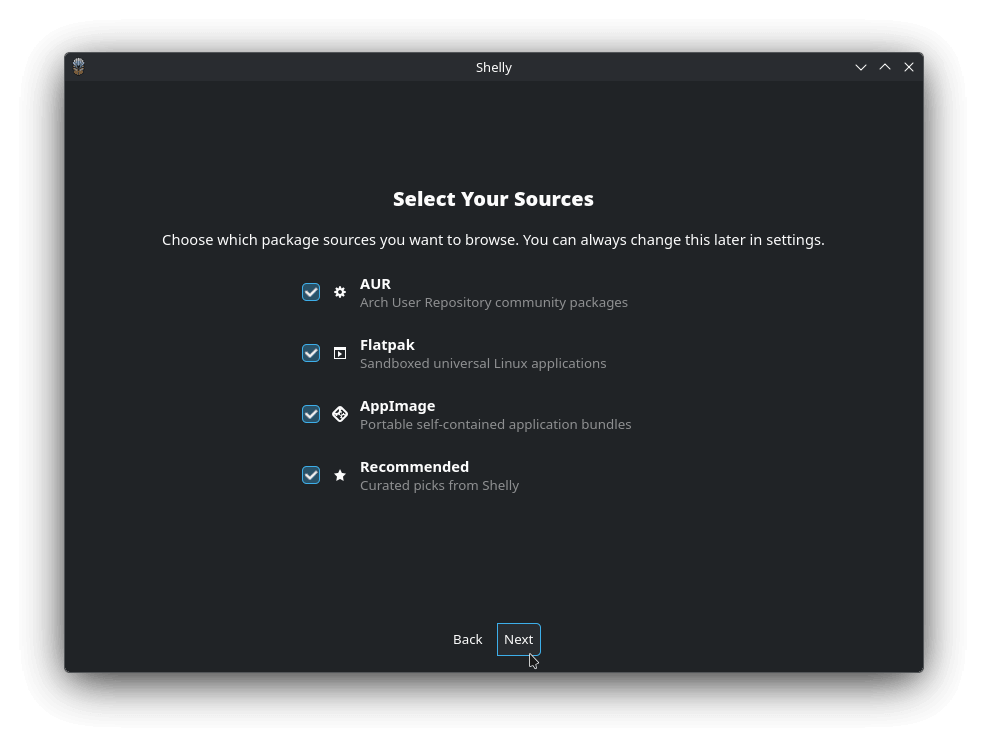
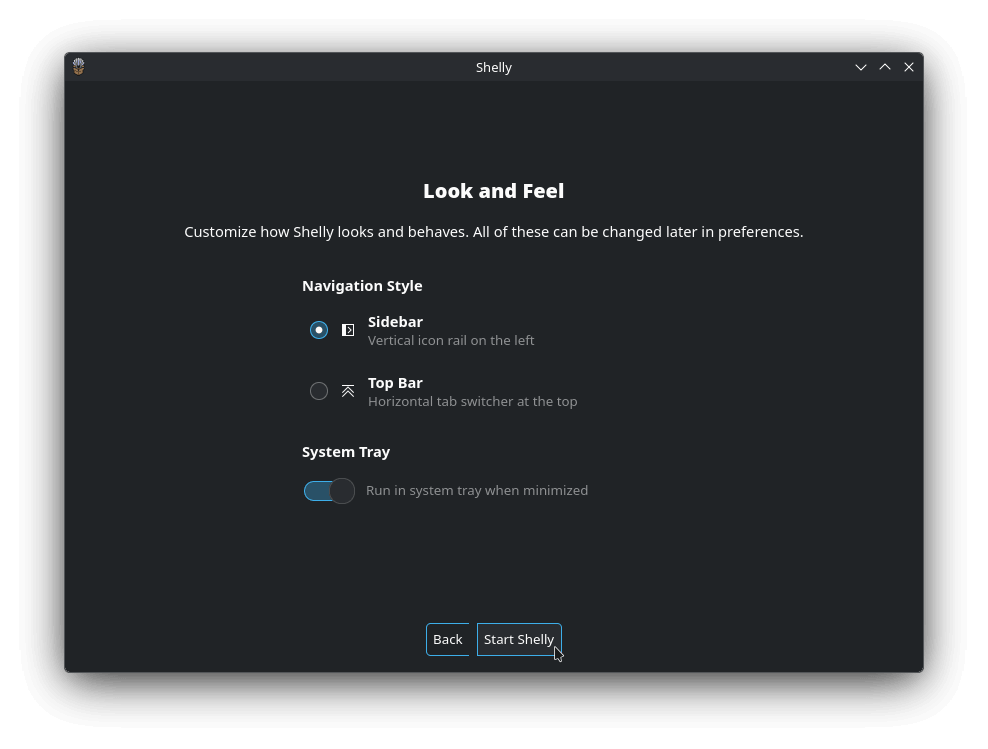
Coupled with that is the new onboarding screen that shows up at first run, along with list and grid views for browsing packages, and AUR PKGBUILD previews with build output.
You also get a new Utilities page for syncing the database, cleaning up the cache, and orphaned package removal. Similarly, its CLI version can now search repositories and the AUR from one place, running update checks across the repos, AUR, AppImage, and Flatpak.
Cachy-Update now runs on top of Arch-Update v4.x, with the systray applet ported to Rust. The new --check --enable flag combines two previously separate steps, turning on automated update checks and launching the tray icon together.
Then there's the handheld detection with chwd, which currently works off board name pattern matching, picking up Bulgarian localization, and no longer tripping up when the board_name DMI file is missing.
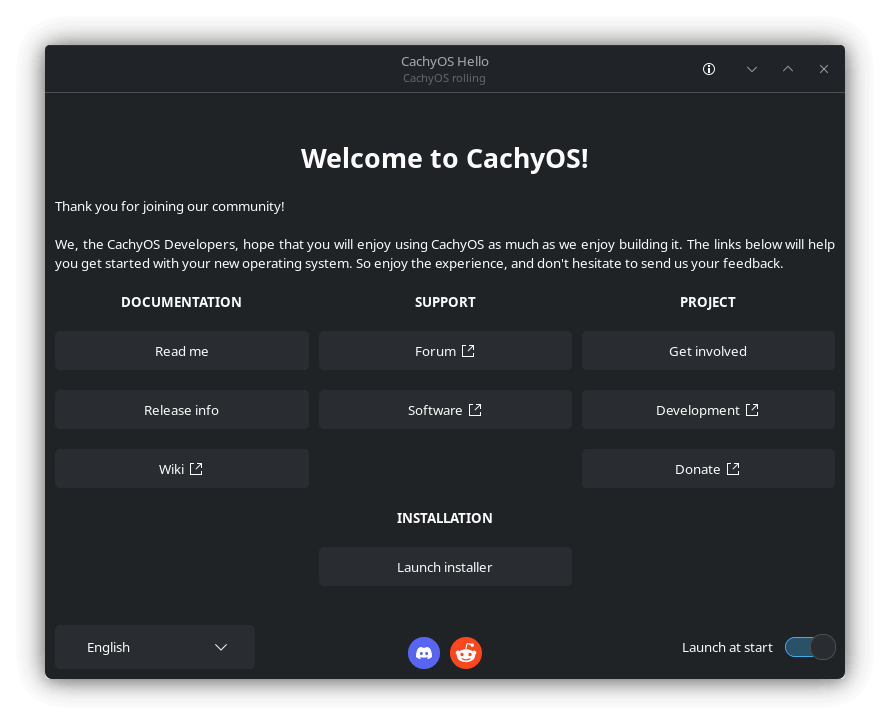
And finally, we have the Welcome app that had its DNS handling reworked, resolving an issue that kept the speed-test based ranking from actually picking the fastest server.
You can refer to the release announcement blog to know about the smaller changes that we have skipped here.
Get this now
Fresh ISOs for both editions are live now. Grab the "Desktop Edition" for the full CPU-optimized desktop experience, or the "Handheld Edition" if you're running a Steam Deck, ROG Ally, Legion Go, or Legion Go S.
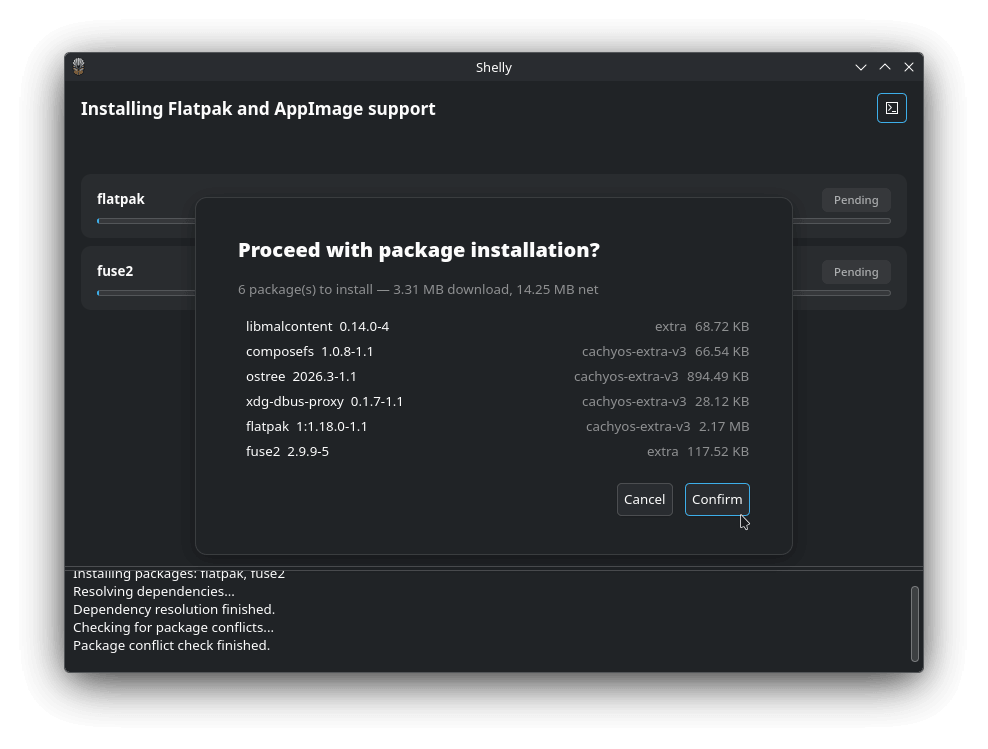
Existing users don't need to reinstall anything to get this release. Just open Shelly from the app launcher and go into the "Update" page. Here, wait a bit for the sync to complete, or click on "Check Again" to pull in updates from the official repositories, AUR, and Flatpak in one go.
If you prefer the terminal, Shelly's CLI can handle the same job with a single command:
Over the past two years, the AI agent space has gone through wave after wave of "engineering paradigm shifts". From Prompt Engineering to Context Engineering, and on to Harness Engineering, each iteration has focused on making individual agents smarter and more reliable.
However, complex tasks in the real world are never completed by a single person.
For example, multi-disciplinary medical consultations require experts from various fields working in tandem.
And yet, AI industry is still trying to build an "all-powerful" single agent rather than a well-coordinated team of agents.
This is precisely the problem openJiuwen aims to address.
What is openJiuwen?
openJiuwen is an open-source AI agent platform jointly built by Huawei Laboratories, Huawei Cloud, and the Terminal Xiaoyi team, released under the Apache 2.0 license. Its goal is to help developers build production-grade AI agents and enable large-scale multi-agent collaboration.
In May 2026, the openJiuwen community released a major component: JiuwenSwarm. It marks the first engineering implementation of "Coordination Engineering", moving the focus from "making a single agent smarter" to "making multiple agents collaborate efficiently."
In collaboration with Huawei's Terminal Tablet & PC Product Line, Software Department, and other teams, openJiuwen launched the HarmonyOS PC version of JiuwenSwarm. This means JiuwenSwarm shares the exact same technical DNA with the HarmonyOS ecosystem right from the architectural foundation.
What makes JiuwenSwarm different?
At the core of JiuwenSwarm is the Agent Swarm mechanism, which enables multiple AI agents to autonomously divide labor, dynamically negotiate, and collaborate efficiently.
Below are its key features.
Heterogeneous model routing for different tasks
JiuwenSwarm supports routing members to different models, providing appropriate model capabilities for different roles, thus allocating heavy-reasoning models to complex logic and lightweight models to simple tasks. This reduces system load and improves overall execution quality. Developers simply declare the role-to-model mapping in a configuration file, and the system automatically manages scheduling.
JiuwenSwarm has already achieved seamless integration with platforms like HarmonyOS Xiaoyi and Lark (Feishu). Developers can build JiuwenSwarm-mode agents that are invokable directly via HarmonyOS devices.
Layered memory architecture
Paired with a layered persistent memory system, JiuwenSwarm retains full-dimensional records across sessions, including operation history, enterprise profiles, and policy guidelines. Through a cross-Swarm experience inheritance mechanism, the experience accumulated by one Swarm can be directly inherited by another.
Distributed deployment
JiuwenSwarm supports distributed Agent Swarms. The Leader Agent and swarm members can run across different processes, different nodes, or even entirely different servers. This capability is especially critical for tasks requiring access to isolated environments, such as intranet databases.
This architecture naturally adapts to the multi-device distributed scenarios of HarmonyOS PC. In the HarmonyOS PC "Agent PC" environment, the PC acts as the home base for the Leader Agent, while HarmonyOS devices like phones and tablets act as Teammate Agent nodes, working together without needing extra adaptation.
With the Channels mechanism supporting platform integrations like Xiaoyi out of the box, developers can build multi-agent applications for the HarmonyOS PC ecosystem straight away.
Observability and self-evolution
JiuwenSwarm provides an intuitive interactive interface, helping users track Swarm running states, task progress, and member workloads in real time.
Simultaneously, its experience closed-loop mechanism captures task breakdown paths, role allocation strategies, tool invocation sequences, and result evaluations, converting them into reusable "task templates." The next time a similar task arises, the Swarm can skip the planning phase and jump straight into execution.
In enterprise office scenarios, OfficeClaw has already leveraged JiuwenSwarm to achieve automated collaboration across content generation, document processing, and knowledge search.
Meanwhile, the Swarm Skills Hub has attracted contributions from numerous developers, fostering a virtuous ecosystem loop.
Where it's headed
In openJiuwen's commercialization roadmap, the native HarmonyOS agent system represents one of the largest and strategically most significant deployment cases.
With JiuwenSwarm now open source, developers can directly build multi-agent applications for the HarmonyOS PC ecosystem using this framework.
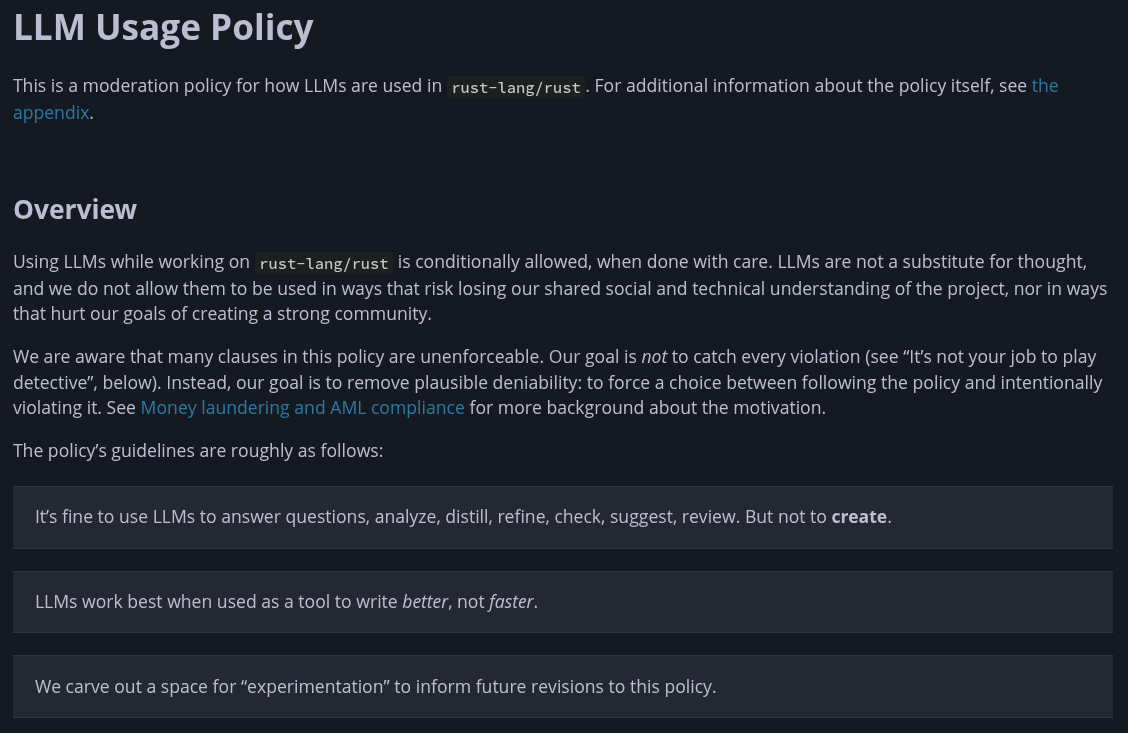
The Rust project has implemented a formal LLM policy, which pushes people to use LLMs to analyze/think through code, not write it.
With how it is written right now, the policy only covers the core code repo for Rust. It lays out many rules around what's restricted, what's allowed, and a circuit breaker that pauses AI-authored merges once they cross half of all merges in a six-week window.
Just so you know, the core repo hosts the compiler and standard library for the entire language. Every Rust program depends on code that lives here, which makes it a very important repo to moderate.
It's no surprise they banned LLM use the way they did.
An LLM can't write your comments, issues, or PR descriptions under your name. Documentation, safety comments, and compiler diagnostics are all off-limits too. And an LLM review can never substitute for a human one or for reviewing your own code before you post it.
What's allowed is private use. Asking an LLM questions about the codebase needs no disclosure, and neither does privately reviewing your own code, summarizing a PR for yourself, or building personal dev tools with one.
Apart from that, there are a few things that reside in a gray area. Machine translation, trivial fixes made with an LLM, and self-verified bug hunting all sit here, and each one needs to be disclosed.
AI-written code gets the strictest treatment of all. It has to be pre-arranged with a reviewer, unlikely to introduce a bug that breaks Rust's safety guarantees, fully tested, and understood on both sides before it earns the new ai-assisted label.
Jynn Nelson, who wrote up the original policy that the project has now adopted, concluded the announcement by stating that:
This is not the end of the story. One of the goals of the policy is to help us gather data: Are people doing interesting and useful things with LLMs? Are they learning? Are they making repeat contributions? The answers to those questions will help us determine how the policy changes in the future.
A similar move elsewhere
NetworkManager, the default network daemon on most mainstream Linux distributions, has picked up an AI coding assistants policy of its own, recently merging a new section to its CONTRIBUTING.md file.
It reads as follows:
Authors are responsible for 100% of the code they submit. Do not send a patch you cannot explain, and do not send one you have not built and tested yourself. Write your own commit messages and Merge Request descriptions.
Those explain why you are making the change, which is the part a tool cannot know. Respond to review comments yourself. If you cannot discuss your own patch with a reviewer, it will not be merged.
Everything in the Legal section applies unchanged. You are the one certifying that the contribution can be released under LGPL-2.1-or-later. A tool cannot certify that for you.
Large machine-generated Merge Requests that no human has reviewed line by line will be closed.
Josephine Pfeiffer of Red Hat wrote the change and merged it herself on August 7, after maintainer approval. If you read the above, then you can see NetworkManager's version is quite simpler than Rust's tiered system. Right now, it is closer to the human-in-the-loop approach that we have already seen in LLVM's policy.
We are constantly seeing such moves. For instance, Codeberg's members recently voted to ban projects built mostly from AI-generated code, citing server strain and climbing hardware costs.
Time and again, we're getting more evidence that AI use can quickly degrade maintenance-focused work and infrastructure if left unchecked. As usual, the open source ecosystem will continue evolving according to what the use of AI dictates.
I sat down with Bianca Lewis of OpenSearch at Open Source Summit India, right after the project's second OpenSearch Con in the country. Bianca Lewis is the executive director of the OpenSearch Software Foundation.
OpenSearch started life in 2021 as a fork of Elasticsearch, born out of Elastic's move away from an open source license. Five years on, I wanted to know how much of that origin story still holds, and how the project sees itself now that it's an AI data infrastructure layer with its own roadmap and its own community.
We covered a lot of ground: whether OpenSearch is still tethered to Elasticsearch in any way, why ELK Stack remains the more recognizable brand among young developers, how agentic AI fits into the platform, and an uncomfortable but necessary question about what happens when vendor-backed open source projects go proprietary.
📋
It was a face-to-face conversation and it is lightly edited for clarity. And since it was not a straight forward text interview, the answers are more conversational in nature.
Five years in, is OpenSearch still a fork of Elasticsearch, or has it become a product of its own? Does it still pull in any downstream changes from Elastic?
Bianca: That is a great question, and the answer, very simply, is yes, it's an independent project. It's a completely independent project now that began as a fork, as you correctly said, and in the early days the two were very, very similar. Today the focuses and the strengths have become very different, and today they are completely independent projects. I think the only commonality is that users can still use both platforms for similar kinds of use cases.
Explaining OpenSearch to the average Linux user
OpenSearch is enterprise-focused, but how would you explain it to a home labber or self-hoster who's never heard of it?
Bianca: Well, firstly, of course OpenSearch is an AI infrastructure layer for enterprises, but because it's on an open source platform, free and easy to use and adopt, people making new startups, entrepreneurs, developers, and everyone else find it very easy to get started. Download it, it's free to use, all the features are open and available, and they can join very easily a community of thousands and thousands of people to get up and running.
So it's not just enterprise-focused anymore, it's for anyone and everyone. Whoever's requirements fit it, OpenSearch is for them. I don't think it was ever built to just be for the enterprise. The startups of today are the enterprises of tomorrow.
"The startups of today are the enterprises of tomorrow."
The ELK Stack brand problem
ELK Stack is still the more recognizable brand in observability and search. How does OpenSearch compete with that brand recognition among young developers?
Bianca: There is no doubt that Elastic, Elasticsearch, and Logstash and Kibana, which make up ELK, have been around a long time, and that's obviously where the fork came from originally. I hope that after five years of OpenSearch developing as an independent and powerful project — 1.7 billion downloads later, 400 individual companies contributing, more than 3,000 contributors, and 15,000 OpenSearch stack users — the differentiation in young developers' minds is becoming clearer just from the sheer weight of numbers.
I think there are two distinguishing factors. The first is philosophy — how developers want to build their technology stacks conceptually and into the future. Elastic, who owns ELK, even though the license is now back to open source after they closed it, is still owned by Elastic and is open core. That means if a young developer wants to build on Elasticsearch and use the ELK stack, they can use the core version for free, but for any more advanced features or support they're going to have to pay and be tied into Elastic. Developers who want to build on a platform that's fully open, where you get the whole thing for free and can choose whether you want support or hosting when you're ready, have that choice with OpenSearch. It's a different philosophy.
The second layer is that the two platforms have grown along different technological paths. Every platform in this space will say "we're a millisecond faster at this," or "we support this use case better," and that's all true — no platform can honestly say it's the best at everything. But OpenSearch is really good at a lot of different use cases that unify the data layer, and because it's the only alternative that isn't just open core, it's making young developers distinguish OpenSearch, hopefully much faster than ELK or any other platform.
Observability, complexity, and cost
Observability stacks are getting heavier, more expensive, and more complicated. What is OpenSearch doing about ease of setup and cost?
Bianca: Those are two very valid questions, so let me answer them one by one.
On complexity: the advantage of proprietary vendors has always been that on day one it's easy — you buy it, it's off the shelf, it works, and you get support. With an open platform, you build it on day one, and you get the benefit on day two, three, and four because it's customized to your needs and you're not dependent on a vendor. But getting started on day one is a very valid point. Because of that, we've recently launched something called Launchpad, which lets you eailylaunch an observability stack, a search application, or any other OpenSearch application, because OpenSearch isn't just observability, there's also search, AI applications, and security monitoring. All this takes a few minutes, and we encourage developers to ask the community if they get lost, even though the documentation is all there. I believe the ease of setting up OpenSearch has been addressed incredibly well and quickly.
On cost, it's a more complicated question. I can tell you OpenSearch is free, but in real life nothing is ever truly free because you still have to run it on infrastructure and manage it.
What OpenSearch does do is make everything cost-effective. Take observability: in the old days, we had to have it because if something in our infrastructure broke, we had to solve it — we couldn't afford downtime — but nobody wanted to pay for it because it was seen as a cost center.
Today the whole language has changed, because OpenSearch gives you a unified view of the context of your data, which is much more cost-effective than doing log analytics, traces, and metrics separately with tools like Grafana and Prometheus, where everyone looked at the data differently and root-cause analysis took five weeks to put the pieces together.
Today it's all in a single pipeline into OpenSearch — you see it all together, through different lenses in the same view, and you can automate resolutions. You can use models and AI to interrogate that data, automate resolutions, and use your observability stack for more than troubleshooting — for company-wide SLOs, understanding acceptable error rates, and understanding cost.
We're in the token economy now, so we can add cost information into traces and logs and understand accurately how much each service is really costing us. Observability isn't just "pay for troubleshooting" anymore — it's become easier to use and a driver of business imperatives.
AI-agent readiness
How AI-agent-ready is OpenSearch, for someone building a project that leans heavily on agentic AI?
Bianca: In the 3.5 release — we've just released 3.7, so we're two minor versions past that — agentic AI became generally available in OpenSearch, and since then it's become a central theme of how people run their search and observability stacks. I think we're ahead of almost any other platform in the world on fully integrated agentic AI.
As you spin up AI agents, OpenSearch is model-agnostic, so you can use any AI model you want. If it's for a search use case, you can monitor those AI agents with the same platform — monitor the trace of the agent, see which services it's calling, what the costs are, and make sure it's doing the right thing. At scale, when you're running 100,000 queries a minute, we can almost let AI monitor AI for security, safety, and compliance.
AI brings scale and the ability to do things quickly. We don't have to work sequentially anymore. But data without context is just data, it's noise. You need a platform that can recall it and spin up AI agents, you need the data underneath it, and you need the agents to talk to each other to perform tasks but without context, all of that is garbage at scale. OpenSearch has built in some features to address this: short-term agentic memory, so an agent remembers the context of what it was asked over the last week or two, and in 3.7, long-term agentic memory as well, which gives us the context we need to take accurate actions on the data. It's already generally available.
AI data layer vs. traditional search
Is OpenSearch now an AI data layer sitting on top of a traditional search stack, or have the two fully merged?
Bianca: I think ultimately OpenSearch will be looked at in a couple of layers. OpenSearch is the application level, and the application level sits on top of an infrastructure that supports the architecture of the application.
What OpenSearch gives you is that it doesn't tie you into any one vendor's choices. You can have that AI infrastructure layer but choose your own infrastructure. You can self-host, or go to one of the hosted services, like our OpenSearch service on NetApp, Oracle, and AWS and choose whatever fits your model. In terms of features and how things run with agentic AI, we don't really say this works better or worse than that. We say everything works and works really well, and with OpenSearch you retain control over how you want to build it, without being tied into any one approach.
On business-source licensing and the Linux Foundation model
This is a bit of an uncomfortable question, more about the Linux Foundation model in general than OpenSearch specifically. MariaDB, Redis, and Elasticsearch all moved from open source to business-source or server-side licenses at some point, largely to protect their business from hyperscalers who weren't contributing enough but were taking their enterprise customers. Then the Linux Foundation and companies like Amazon fork the original project, as happened with Terraform and OpenTofu, and grow it as the "true" open source version while the original gets left behind. Is there an injustice in that, toward the original projects?
Bianca: I think it's a really great question. I don't ever judge a vendor for deciding to close-source or open-source a project. But without intruding into the particulars of how Elastic or AWS felt at the time, which I can't speak to, I can share a personal viewpoint.
If a vendor is the owner of an open source project, to me that open-core label is simply a go-to-market strategy to get users in and then sell services, support, and enterprise capability. It's not what we'd call vendor-neutral. Building a wide community on a vendor-owned open source project is always tricky, and that's why Mongo, Elastic, Redis, and a few others reached a point where the situation became a threat — the go-to-market had been really successful, they'd built a community, but the biggest customers weren't converting.
I find it interesting that Elastic changed back to an open source license after closing it — because they were losing the community, but they'd closed it because they were losing enterprise customers. They were fine with small players using the free product but wanted the big-money customers. The challenge is that often you want your cake and to eat it too. Once you build your brand on community involvement and then tell the community you're closing it, even if you reopen it later, a lot of the community will just say "thanks, but no thanks."
That's the beauty of the Linux Foundation model. It's a nonprofit that nobody owns, and profit isn't the motive. Yes, there will be cases where hyperscalers fork a project. I think it's important to understand that once they fork it and give it to a nonprofit like the Linux Foundation, they give up ownership. They don't own OpenSearch anymore. They could fork it again and keep something in-house, anyone can always do that, but OpenSearch itself can never be closed now, because the Linux Foundation owns it.
OpenSearch itself can never be closed now, because the people that own it is the Linux Foundation.
It also helps to look at where each company actually makes its money. Take Elastic. They make money selling Elasticsearch licenses, whether self-hosted or on the cloud, so it makes sense for them to gate advanced features behind a license, because they have to survive as a business and answer to shareholders.
Hyperscalers like AWS, Microsoft, Google, IBM, and Oracle make their money from selling compute and infrastructure, not directly from the application. Carrying the burden of growing and innovating an application takes away from their core focus of selling infrastructure, so it makes business sense for them to let the community develop the application while they focus on providing a great service to run it, and put their money where they actually make money.
That's the subtle reason hyperscalers are so eager to support Linux Foundation projects. It lets them focus on where they make money, and it guarantees these projects stay open, available, and well-maintained rather than becoming orphaned.
Ultimately it takes time for a project's original founder to say "now we can let the community manage it." What that actually means is that over the years, instead of maintaining the application with a full-time in-house engineering team, the founder becomes one of the companies contributing to a shared engineering effort. You get all the benefit, but the innovation and cost become shared, and the community retains the choices, which is always good for business.
Certifications
Does OpenSearch have plans for a certification track, like Kubernetes has with the CKA?
Bianca: Yes, we've actually recently announced that. The way we're doing it is quite unique and exciting for the open source world. We've already released the first form of learning content, and in a couple of months we're going to release an OpenSearch competency course that carries a badge of competency you can put on LinkedIn.
On top of that, we're going to do the OpenSearch competency certification proper, and based on that certification, we're doing accreditations for different vendors and companies. The follow-up to that is specialist certifications. Since OpenSearch is used across quite a few use cases, we'll have competencies in observability, search, AI applications, and security monitoring. And to renew your certification, instead of retaking the same test every couple of years, as long as you're advancing to more advanced certifications you keep your original qualifications. We want people to grow and advance within OpenSearch.
The biggest misconception about OpenSearch
What's the one thing that most people get wrong about OpenSearch?
Bianca: There are so many things people get wrong about OpenSearch, but I think the biggest one is not recognizing that, as an AI data infrastructure layer, OpenSearch is the only cloud-native, AI-native platform in the world that's truly open source and vendor-neutral. I don't know if people really understand that.
OpenSearch is the only cloud-native, AI-native platform in the world that's truly open source and vendor-neutral.
Maybe if it were named something like "OpenSearch AI" or "OpenAI Search," it would be more recognizable.
Bianca: Yeah because people often equate it to "how does it compare to Elasticsearch?" But conceptually, you can't really compare the two. They'll say "it's like the AWS service," but that's just a vendor who's a member and provides a service on top of it. The platform runs completely independently, within a community that's truly open source. It's not just an AWS project anymore; it's a truly independent, community-owned observability stack.
OpenSearch's 3.7 release, with long-term agentic memory, is already out, and the project's competency certification track is expected to roll out over the coming months. You can find the project's documentation, downloads, and community channels at opensearch.org.
Illinois has become the latest U.S. state to pull operating systems into the age verification pool. Governor JB Pritzker has signed HB5511, the Children's Online Social Media Safety Act, putting forward a new age verification framework for every device sold or used in the state.
The bill imposes age check on "covered manufacturers," a category that lumps device makers, operating system providers, and app stores together.
Protect the children!
By January 1, 2028, these manufacturers have to build an interface at account setup asking a parent or account holder for the child's birth date. That date is then converted into one of four age brackets: under 13, 13 to 15, 16 to 17, or 18 and up.
The law also stipulates that all transmitted digital signals have to be encrypted.
Applications can then pull that bracket through an API once a user downloads or launches them. Once they get a signal marking a user as a minor, they're legally treated as having "actual knowledge" of that.
Once flagged, apps have to turn on a set of safety settings. Feeds get restricted, profiles get hidden from adult strangers, messages from adults get blocked, precise location gets masked, and notifications go dark between 10 PM and 7 AM.
Parents can override these defaults for their kids, and minors over 16 can do it themselves too.
Apps have until July 1, 2028 to start requesting these signals, and violations can cost up to $50,000 each, enforced by the state Attorney General. Device manufacturers and apps acting in good faith aren't liable if a signal turns out wrong.
Rep. Jennifer Gong-Gershowitz led the bill through the House, with Reps. Margaret Croke and Janet Yang Rohr as chief co-sponsors, and more than a dozen others signed on. Sen. Willie Preston carried it in the Senate alongside Sens. Robert F. Martwick, Mary Edly-Allen, and Adriane Johnson.
It passed 82-27 in the House and 57-0 in the Senate before clearing final concurrence unanimously.
Open source exemption where?
Illinois isn't the first state to try this model. Colorado's SB26-051 and California's AB-1043 both rely on the same OS-level age signal setup; apps request it, and the device answers.
Both of these started off without any concessions for open source platforms (e.g., Linux).
Colorado's SB26-051 originally applied to every operating system and developer without exception. System76 founder Carl Richell worked directly with state lawmakers to change that.
The bill picked up language exempting operating systems and developers distributing software under terms that let anyone copy, redistribute, and modify it freely. It also added a clause blocking platforms from locking down modified versions.
California's AB-1043 had the same gap. Assembly Member Buffy Wicks, the same lawmaker who wrote AB-1043, introduced AB-1856 to fix it. After several rounds of edits, the amended bill redefines "operating system provider" to exclude anyone distributing software under those same open license terms.
Illinois has none of this. HB5511's definitions for "covered manufacturer" and "application store" stay just as broad as these bills were before their amendments.
My two cents
Well, folks, we sure are getting close to someone's wet dream of having a dystopian hellscape where people don't have control over their computers, food, or water.
On the one side, you have these so-called "bipartisan" bills passing through without much hindrance under the guise of protecting children, and then you have the island-class cretins who still haven't been prosecuted.